






ams OSRAM Robotic Solutions

ams OSRAM Robotic Solutions enhances robot performance by improving their sensing and precision capabilities, i.e., making them smarter. Smart robotics range from traditional robot arms in production lines to mobile robots used in logistics, so-called AGVs or AMRs, to advanced service robots. Smart robots play an increasingly important role in industrial automation and private homes. These robots can take over repetitive and dangerous tasks safely and flexibly, saving time and cost.
Mobile Robots
Mobile robots, also known as Autonomously Guided Vehicles (AGVs) or Autonomous Mobile Robots (AMRs), are widely popular in automation. These robots are primarily driven by the availability of vision-based technologies that enable reliable 3D imaging for object recognition and collision avoidance. These robots are used mainly for navigation and safety applications in collaborative environments. The vision technologies used rely on specially designed cameras. These consist of spatially separated, baseline image sensor modules with laser or LED-based synchronized scene illumination or a single image sensor paired with a laser-dot-projection module. It is called “active stereovision” when both technologies are combined. In stereovision, the pixel triangulation between the two cameras allows the computation of a 3D depth map of the complete scanned scene. In the case of structured light, the 3D depth map is derived from the observed planar distortion of the predefined projection pattern.
Stationary Robots
Stationary robots accelerate and execute manufacturing tasks in production, such as pick-and-place, welding, or assembly. With the help of more advanced vision-based solutions, robots can perform more complex tasks, providing greater flexibility and making them useful for different tasks.
Household Robots
Household robots, primarily vacuum robots or robotic mowers, are a consumer version of industrial mobile robots. These robots typically operate at lower speeds and are optimized for cost. Due to lower weights and slower speeds, the scanned area of these robots for environment sensing is narrower than in professional systems. In these, often, a combination of stereovision or structured light imaging for the front view is paired with time-of-flight sensor modules for obstacle sensing. Due to the smaller robot size, even small objects like cell phone charging cables could become a blocking obstacle requiring reliable detection.
Featured Products

ams OSRAM SMARTLED® 0603 Gen 2 LEDs
Designed for status indication in electronics and come in small package sizes.

ams OSRAM TMF8820, TMF8821 & TMF8828 Multizone ToF Sensors
dToF device is based on SPAD, TDC and histogram technology and achieves a detection range of 5000mm.
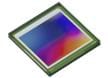
ams OSRAM Mira220 1/2.7 2.2MP Global Shutter Image Sensors
For 2D/3D consumer & industrial machine vision applications, 2.79μm pixel size, high sensitivity.
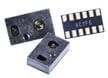
ams OSRAM TMF8801 1D Time-of-Flight Distance Sensors
Time-of-Flight sensors with 945nm integrated IR VCSEL in a 2.2mm x 3.6mm optical module (1.8V, I2C).

ams OSRAM AQAA-20 BELAGO 1.1 Dot Projector
Proprietary infrared dot-pattern illuminator for stereoscopic imaging & structured light platforms.
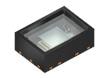
ams OSRAM BIDOS® P2433 Q VCSEL Power Arrays
Offers excellent performance and power output in a compact QFN package.

ams OSRAM FIREFLY® E1608 CT DELSS1.12 LED
Specifically designed for heart rate monitor applications.

ams OSRAM FIREFLY® E2218 SMD LEDs
Designed to expand the offering of products for use in mobile devices like health monitoring.

ams OSRAM Micro SIDELED® LEDs
Deliver exceptional quality and first-rate reliability with a choice of side lookers.
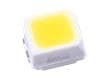
ams OSRAM Mini TOPLED® LEDs
Achieves a typical luminous intensity of 1700mcd @ a color temperature of 4000K and 1900mcd @ 6500K.

ams OSRAM Infrared (IR) Emitters
Designed for a wide range of infrared applications, available in wavelengths from 850nm to 940nm.

ams OSRAM CHIPLED® Light Emitting Diodes (LEDs)
Housed in small packages and are an ideal choice for space-constrained applications.

ams OSRAM SFH 4259B Power TOPLED™ Lens
Offers superior 88mW/sr radiant intensity employing IR:6 thin-film chip technology for IREDs.

ams OSRAM SFH 4258B Power TOPLED™ Lens
Offers exceptional 202mW/sr radiant intensity employing IR:6 thin-film chip technology for IREDs.

ams OSRAM SFH 4249B Power TOPLED™ Lens
Offers excellent 83mW/sr radiant intensity utilizing IR:6 thin-film chip technology for IREDs.

ams OSRAM SFH 4248B Power TOPLED™ Lens
Offers exceptional 189mW/sr radiant intensity utilizing IR:6 thin-film chip technology for IREDs.