



Microchip Technology PolarFire® SoC FPGAs

Microchip Technology PolarFire® SoC FPGAs are a combination of low power consumption, thermal efficiency, and defense-grade security for smart, connected systems. These devices from Microchip Technology are the first system-on-chip (SoCs) field-programmable gate arrays (FPGAs) with a deterministic, coherent RISC-V CPU cluster. They also have a deterministic L2 memory subsystem, enabling Linux and real-time applications. PolarFire SoC devices deliver up to 50% lower power than alternative FPGAs. They are built on a mid-range, low-power PolarFire FPGA Architecture that spans 25k to 460k logic elements (LEs) and features 12.7G transceivers. EEMBC CoreMark®-Pro benchmarks chart overpower consumed illustrates the PolarFire SoC low-power advantage.
PolarFire SoC FPGA Family

Microchip PolarFire SoC FPGA family offers scalable, flexible solutions for power-efficient, real-time compute in a variety of applications. Devices span a range of logic densities and package options to support diverse system requirements. The Microship PolarFire Core SoC FPGAs are cost-optimized variants that do not include high-speed SerDes and PCIe® endpoint/root port capabilities.
PolarFire Core SoC FPGA Family

Microchip PolarFire Core SoC FPGAs bring the power efficiency, security, and reliability of the original PolarFire family to a streamlined platform that eliminates SerDes and PCIe to reduce cost and complexity for a broad range of applications.
Unlike SRAM-based FPGAs, which are plagued by high static power and configuration volatility, PolarFire Core devices leverage nonvolatile Flash technology for up to 50% lower power consumption, instant-on capability, and built-in resistance to SEUs. This feature makes them excellent options for power- and thermally constrained environments such as industrial control, medical imaging, automotive, and aerospace systems.
Applications
- Communications
- Significantly improves network capacity and coverage with limited spectrum and CAPEX
- Growing IoT with minimal energy consumption
- Lowers physical and carbon footprint
- Defense
- Provides battlefield portability and increased mission life
- Increases automation in vehicles and weaponry
- Enhances operator situational awareness
- Increases cybersecurity
- Ensures supply chain security
- Industrial Automation
- Expands factory automation networks
- Growing number of M2M sensors and nodes
- Secures decentralized computing
- Improves portability
- Achieves cyber security
- Improves functional safety
- Automotive
- Delivering determinism to driver-assist systems
- Increasing vehicle automation
- Growing AI/ML implementations
- Lowering power consumption
- Smart Embedded Vision
- Delivers 4K video and smart imaging
- Applying AI/ML
- Applying imaging to portable products
- Extends battery life
- Eliminates thermal fans and heatsinks
- Achieves secure surveillance
- IoT (Internet of Things)
- Ensuring the lowest power, most secure, edge and gateway devices
- Enables data processing at the edge, distributed networking systems
- Increases IoT automation and networking
- Delivers maximum performance with a low carbon footprint
Block Diagram

Videos
Additional Resources
Development Tools

Microchip Technology MPFS250-VIDEO-KIT Polarfire® SoC FPGA Video Kit
Offers a high-performance evaluation of 4K image processing and rendering.

Microchip Technology PolarFire SoC Discovery Kit
Features the PolarFire SoC FPGA which has a 5-core, 64-bit CPU cluster based on the RISC-V ISA.
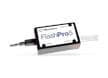
Microchip Technology FlashPro Express
Provides in-system programming for FPGA families, including PolarFire®, IGLOO2, SmartFusion2 & more.
Associated Products
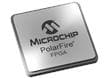
Microchip Technology PolarFire™ FPGAs
Deliver up to 50% lower power than equivalent SRAM FPGAs.
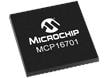
Microchip Technology MCP16701 Power Management Integrated Circuit
Integrates eight DC-DC Buck regulators, four 300mA LDOs, and one LDO controller.
Related Solutions

Microchip Technology Humanoid Robotics Solutions
Technologies and capabilities to address key design challenges in humanoid robotics.